Every contractor who's signed up for Houzz Pro has had the same experience at some point: you needed something simple — a way to send estimates, collect payments, manage scope changes, and keep clients organized — and Houzz Pro looked like it could do all of that. So you signed up.
Then the invoicing problems and annual contract kicked in.
Here's what contractors are actually dealing with, and why many are switching to TruFeld.
"TruFeld's invoicing saves me at least two hours/week compared to the process I followed in Houzz-Pro" - Travis Wyatt, President - Unique Outdoor Designs"
The contract problem no one warns you about
Houzz Pro plans range from $49 to $700 per month. That's $588 to $8,400 per year — but the real catch isn't the price, it's the lock-in. Contractors consistently report that after the trial period ends, the service auto-converts to annual billing. Trying to cancel mid-contract? Houzz Pro's response is that it's "legally binding."
The Better Business Bureau has logged over 500 complaints about Houzz Pro in the last three years, averaging 1.03 stars. Billing disputes, unexpected renewals, and customer service that doesn't respond — these aren't edge cases. They're a pattern.
And the billing contract isn't even the deepest hook. Houzz Pro builds websites for contractors and explicitly purchases the domain on your behalf — which sounds like a convenience until you want to leave. Contractors report that after cancellation, Houzz won't release the website. The Google rankings you've built, the URL on your truck wrap and business cards, the backlinks from years of satisfied customers — all of it is tied to infrastructure Houzz controls. Switching tools shouldn't mean rebuilding your online presence from scratch.
TruFeld has no annual contract, no monthly fee, and no subscription. Starter is free forever. Pro is $299 once. Pro Plus is $499 once. There's nothing to cancel because there's nothing billing you every month — and nothing holding your business hostage when you go.
The invoicing problem your clients are dealing with right now
Here's something Houzz Pro's sales page doesn't mention: contractors widely report that the invoicing features don't work properly. Templates can't be imported or exported. Clients have trouble navigating the payment flow. When your client can't figure out how to pay, that delay sits in your cash flow.
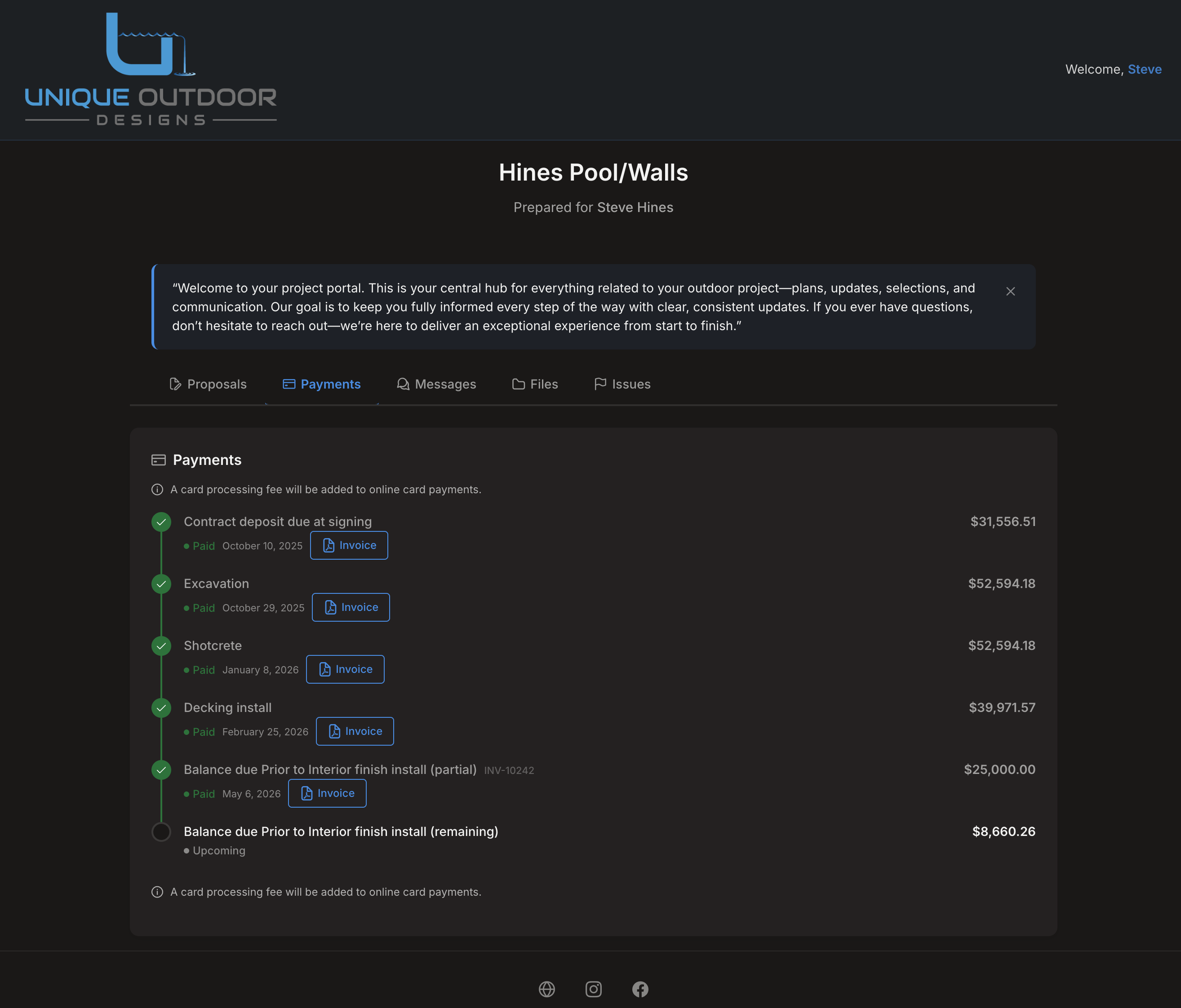
TruFeld generates a branded invoice PDF automatically with every payment — your logo, line items, any surcharge breakdowns, any scope change adjustments. Clients get it in the portal and by email. It works the first time.
Your clients are still lost in their email
Houzz Pro doesn't give clients a dedicated portal where everything lives. Communication relies on email monitoring — conversations scatter across threads, and both sides lose track of what was said and when.
TruFeld gives every project a branded portal with your business name and logo. Proposals, signatures, invoices, messages, files, and scope changes all live in one place. Your client opens the portal instead of digging through their inbox. Every conversation is documented — no more "you never told me that."
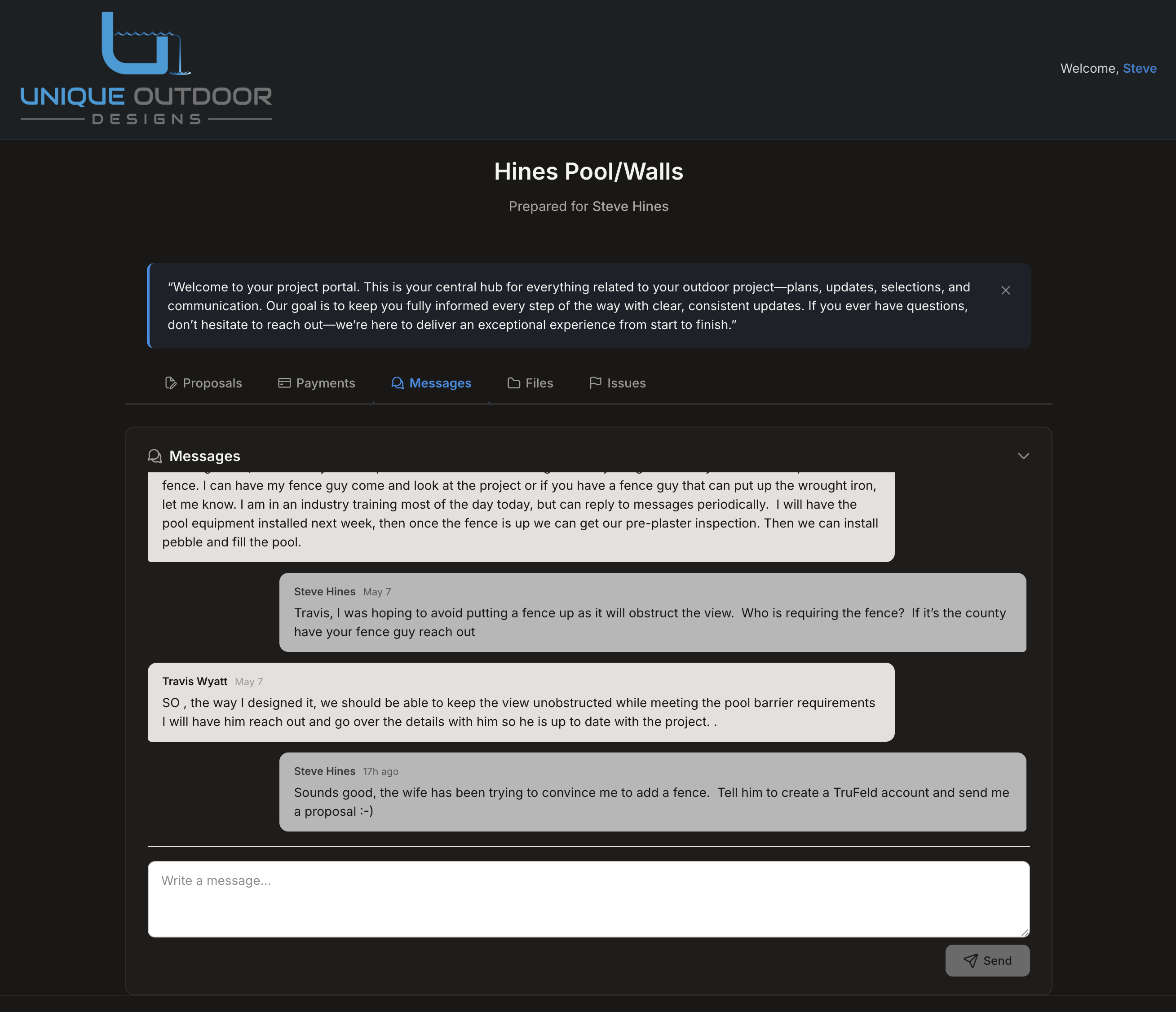
Fig 1. Branded payments in the client portal
A real change order amends the project — not just the invoice
Most tools call any cost adjustment with a signature a "change order." Houzz Pro has that. You can add new line items, edit existing ones, get a client signature, and collect the delta payment. That covers the basics.
What it doesn't do is touch the project itself. Houzz Pro's change order is a cost-only document — it doesn't update your milestones, your schedule, or your payment plan distribution. If a client six weeks into a kitchen remodel decides to move a load bearing wall, you can price it and get it signed in Houzz. But the new milestone doesn't appear in the project timeline, the schedule doesn't shift, and the payment plan requires manual edits one payment at a time.
TruFeld treats a change order as a scope amendment — not just a billing adjustment. A Detailed change order can add new milestones, log the effort hours, note the schedule impact, and specify how the additional cost distributes across the payment plan. When the client approves it in the portal, the whole project — milestones, schedule, payment plan — updates atomically. There's a snapshot audit trail of exactly what the project looked like before and after.
For a minor pricing tweak, TruFeld has a Quick change order that stays out of your way. For anything that actually changes the scope of work, you have the structure to document it properly — which is what protects you when a client disputes something four months later.
Clients pay directly from the portal — by card or ACH
When it's time to collect, your client doesn't need to log into a separate system or dig for a payment link in their email. Every invoice in your client's portal has a Pay button built in. Clients can pay by credit card, debit card, or ACH bank transfer — all processed through Stripe. Apple Pay and Google Pay work too for clients on mobile.
You control how processing fees are handled: absorb them, split them 50/50, or pass them to the client. For contractors who prefer wire transfers or checks, Pro and Pro Plus plans let you mark external payments manually, and the invoice updates automatically.
The result is that payment happens inside the same portal where your client already reviewed the proposal and approved the change orders — not in a separate flow they have to figure out.
What the math actually looks like
For a contractor processing $8,000/month in client payments and passing credit card fees to clients:
That's roughly $4,200 saved — with no contract and a better client experience.
TruFeld's invoicing fee is just 0.6% per invoice, capped between $5 and $50 depending on your volume, no matter the invoice size. Your first $10,000 invoiced is free on the Starter plan.
Making the switch
Moving from Houzz Pro is straightforward. Export your client list and import it into TruFeld as a CSV. Upload your existing proposals as PDFs — TruFeld's AI converts them into editable proposals with your pricing tables, sections, and line items intact. Most contractors send their first proposal within 15 minutes.
When your current Houzz Pro contract ends, you're not losing anything you actually relied on for the client workflow. You're losing the annual bill.